October 12, 2026
Monday
San Sebastián-Donistā, Gulpuscoa, Spain
Well, it is Christopher Columbus Day in the United States, and a National Spanish Holiday. I went down for breakfast at 07:00 only to discover that breakfast opens at 07:30. Sat and talked with Bill, a retired or semi-retired back surgeon from Texas, while we waited for breakfast to open.
Breakfast opened and we went in. The breakfast room is huge! The selections aren’t bad either. We ordered Cappuccini and then got our breakfast. He ordered an omelette while I just took the fired egg from the buffet.
I got back to the room about 09:00 and found Mary in the process of getting dressed. The walking tour of the old town began at 10:00. We then spent nearly two-hours walking around San Sebastián. The old town really isn’t all that old. Apparently is all was burned down about 1813 during the Peninsular War. The allied Anglo-Portuguese troops breached the French-held city walls. An ammunition depot exploded and the subsequent fires swept through the city.
In 1886 the Spanish Queen Regeny María Cristine began summering in San Sebastián. Her court’s presence secured the city’s status as the official summer destination for the Spanish Royal Family. A year later the elegant Gran Casino (think of the casino on Monaco) was built. It is now the city hall.
In 1893 the Miramar Palace was completed and began serving as the Royal Summer Residence. Today it is a publicly owned building and serves as a summer residence of the Basque University. The Neo-Gothic Good Shepherd Cathedral was consecrated in 1897. The majestic María Cristina Bridge opened across the Urumqi River in 1905.
The period between the end of the Franco-Prussian War in 1871 and the outbreak of WWI in 1914 is known as the Belle Époque period. The height of Art Nouveau period. In 1912 the Hotel María Cristina, the Victoria Eugenia Theatre, the La Perla spa and the Monte Igueldo funicular railway all opened their doors. After WWI a nationwide ban on gambling dealt a blow to local tourism, forcing the Gran Casino to close.
The Spanish Civil War brought political tension and a dramatic siege of the city with Nationalist troops capturing the city early in the conflict. In the mid-20th century the city grew rapidly, absorbing outlying rural areas and building out the modern Amara district. The population climbed to over 100,000. 1953 saw the very first San Sebastián International Film Festival. This instantly transforms the city onto the global stage for Hollywood and European cinema icons.

Outside of San Vicente Church in old town

The main alter on the inside of San Vicente Church
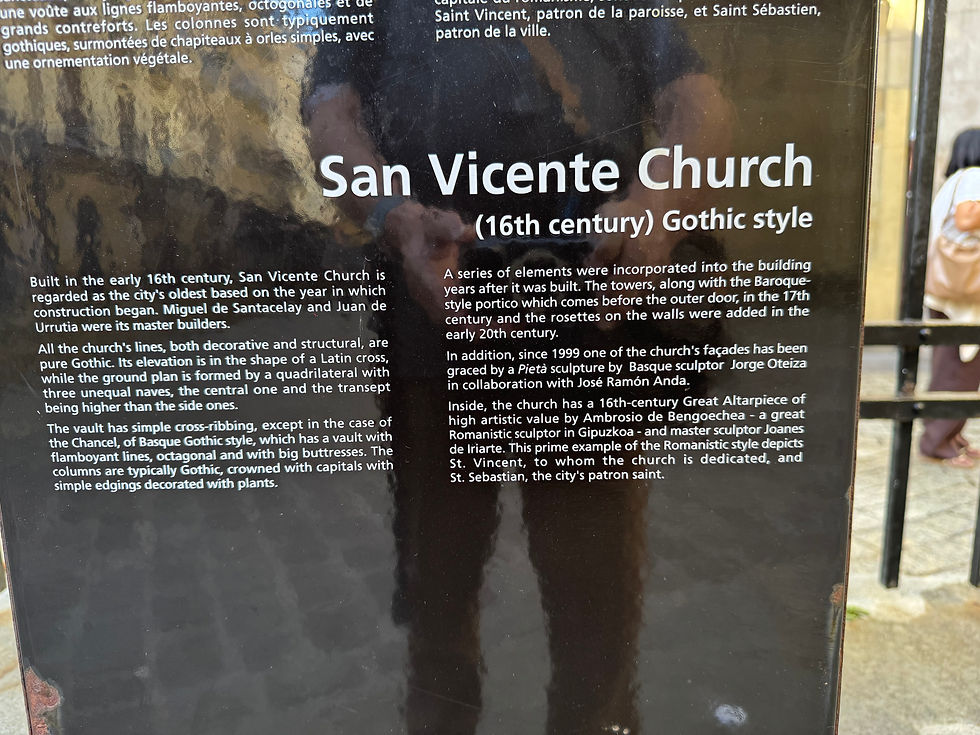
The history of the church
Today old town is filled with restaurants, shops, mostly touristy shops, and its narrow streets are car fee making walking easy. Just before noon we started the gastronomic part of the tour. Stoping at three different bar/restaurants learning about and wasting pintxos (in Italy it is call aperitif). Our first stop was at Bar Martinez which opened in 1942. They served Pintxo Gilda (a guindilla pepepr, a Cantabrian anchovy fillet and a manzanilla olive on a toothpick. I was given a Pintxo which contained Mushrooms marinated in olive oil and garlic. The next Pintxo was a red bell pepper stuffed with tuna fish. I got the artichoke Pintxo (Pintxo de alcachofa) a combination of an artichoke heart, ham, olive oil and cheese rolled into a ball and fried. They served this with a white wine called Rezabal Txakoli. It was all very good.
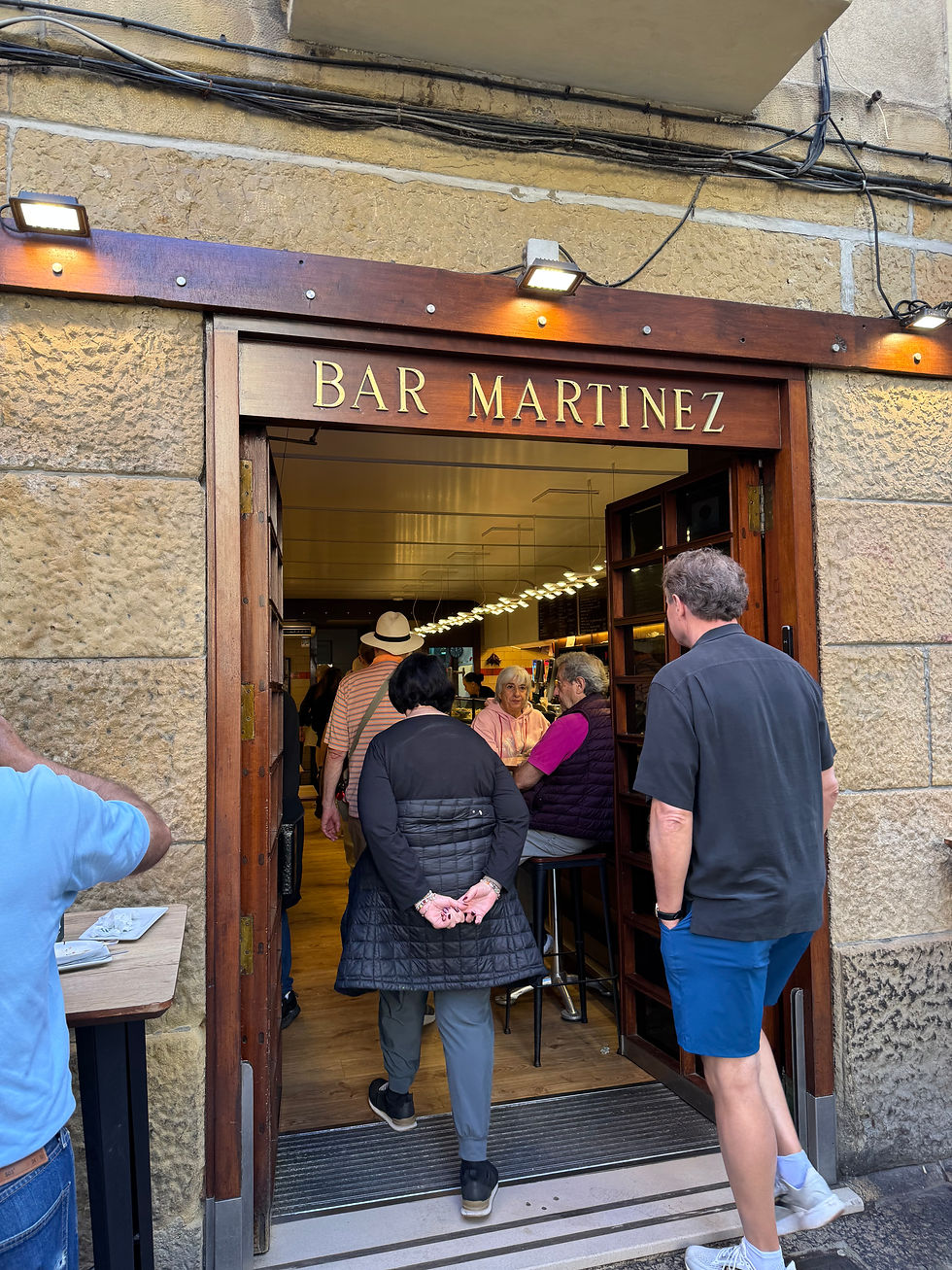
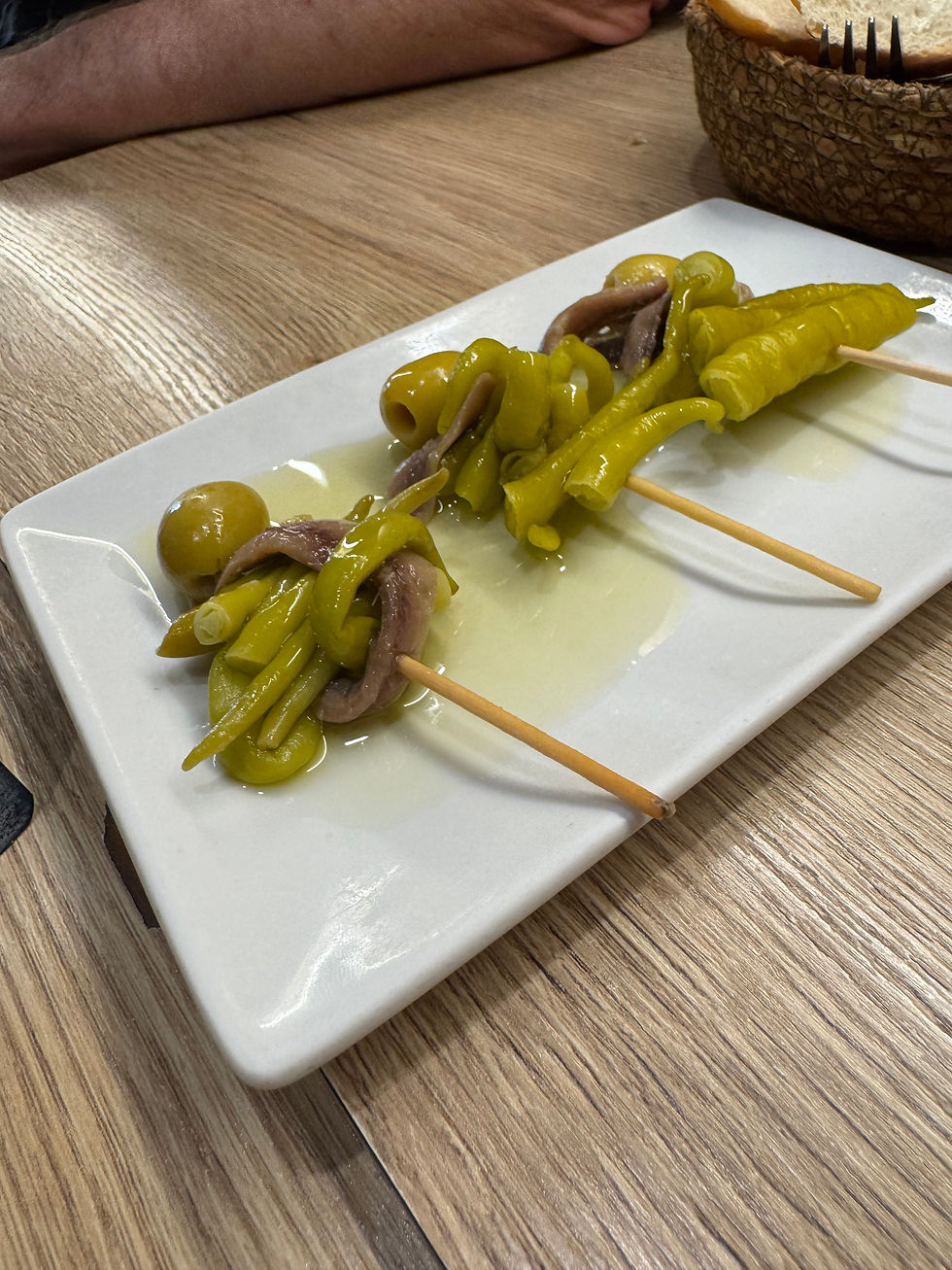
Pintxo Gilda
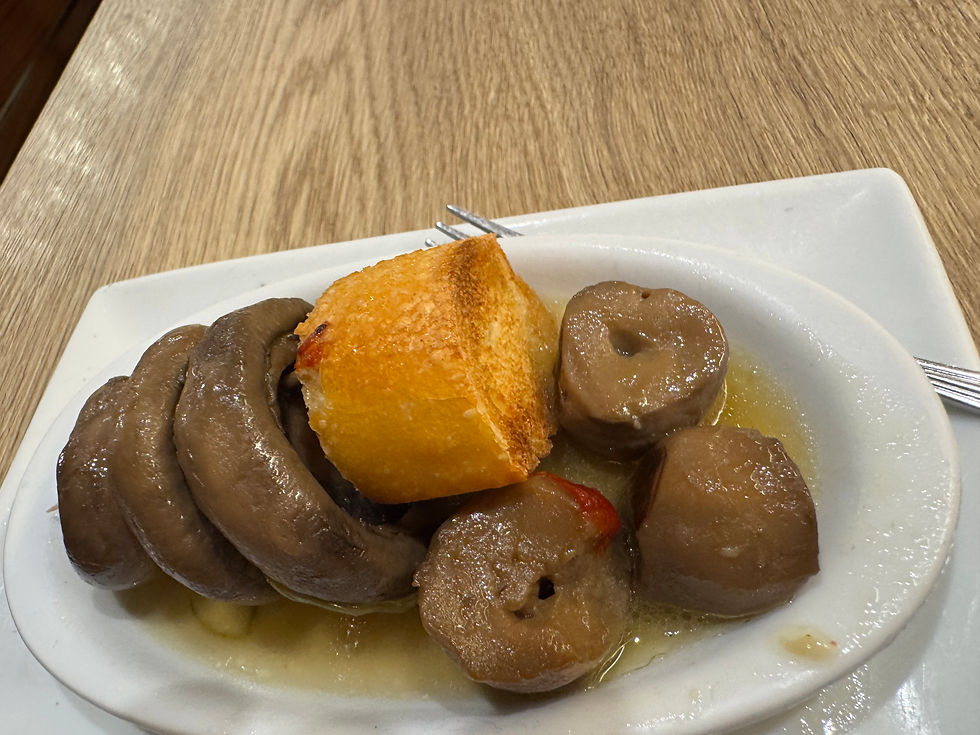
My mushrooms

Red bell pepper and tuna

Pintxo de alcachofa
The next stop was another bar/restaurant called Polka. The first pintxo was called tall con chistorra or maybe, talo con txistorra, it is confusing since the use both Spanish and Basque languages. A talo is a traditional rustic Basque flatbed mead from corn flour, water and salt, which is grilled on a hot plate until lightly charred. I know you are thinking tortilla, but don’t say that here they will go into great deal why it is not a Mexican tortilla (hint – it is). Wrapped inside the talo is the fast-cured thin Basque pork sausage (chistorra or txistorra) which has been heavily seasoned with garlic, sale and smoked paprika (pimentón). The sausage has a vibrant red color and a smoky savory kick. But it isn’t really “spicy”.


Our group

Pumpkin spice balls
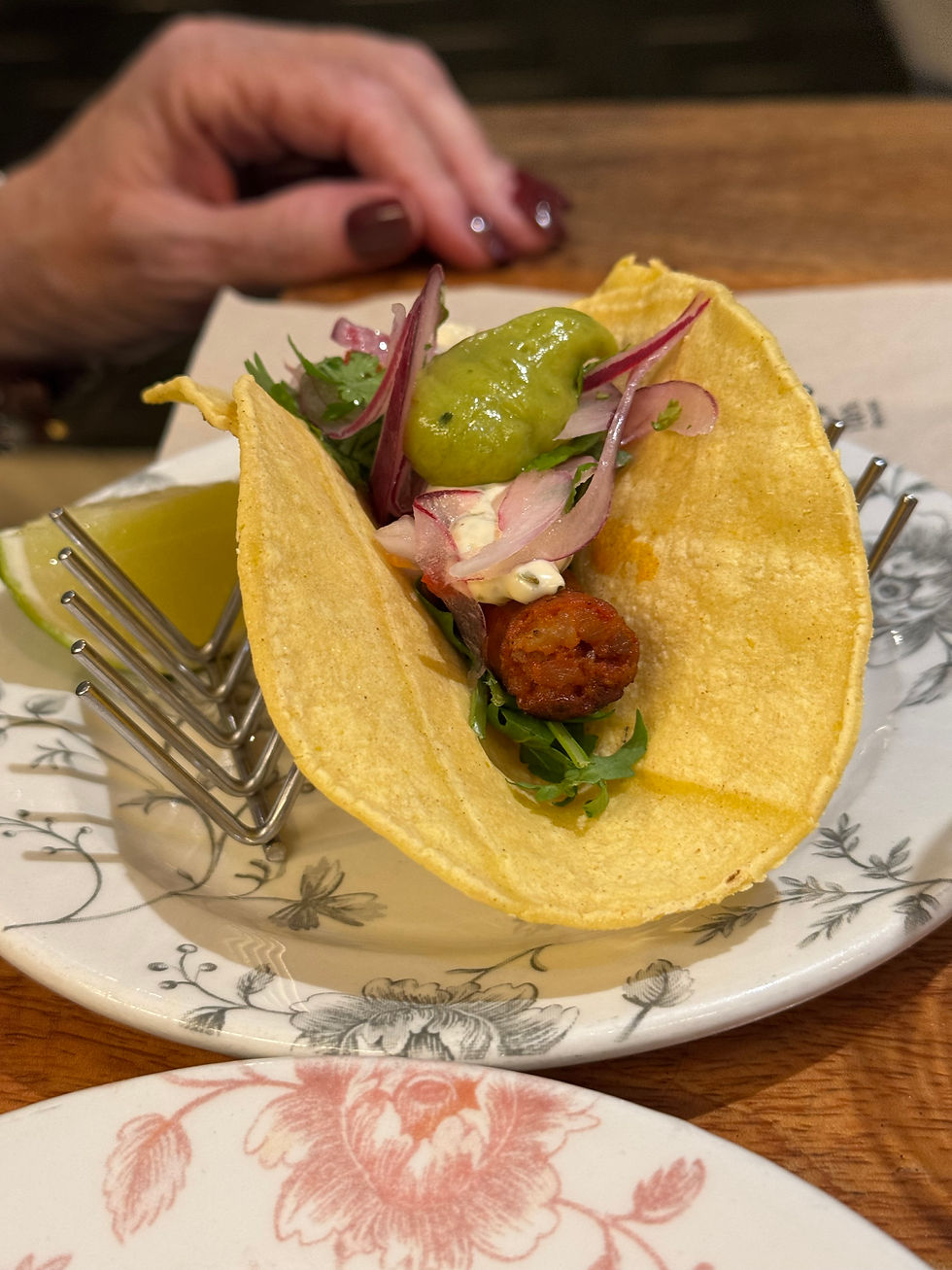
The non-taco
The next pintxo is a pumpkin spiced croqueta. Mashed pumpkin with flour, a pinch of sale, some cheese, and a warn spice blend most likely nutmeg, ginger and allspice. Deep fry the whole thing and put a dollop of cheese on top. Excellent, but we are starting to fill-up.
The next stop is Fermin Cālbetón. Thankfully we only got a choice on one of two dishes. Steak, French fries and a roasted red bell pepper, or a roasted avocado filled with a spiced pumpkin mix. Again, excellent, but now we are stuffed. After all this food it was a quick walk back to the hotel.

Mike looking a little lost

The steak, pepper and fries

That roasted green thing with pumpkin
Mary went down for a four-hour nap. I worked on future travel plans and wrote the blog for the day, as well as investigated a little about tomorrow’s tour into France. About 18:00 we went out for a walk. We went into old town again, found a small grocery store and bought some fruit, cheese and sliced chicken.
We returned to the hotel ate our found feast, but not very much as we ere still pretty much full. Then it was bed-time.
Buenas noches y hola - Buonanotte e Ciao,
Enrico e Maria


Comments